
What Delaware Drivers Actually Pay
Delaware drivers paid an average of $1,462.03 per insured vehicle in 2023, according to state insurance statistics. That figure represents the annual expenditure across all coverage levels, from minimum liability to full coverage with comprehensive and collision. Your household's actual premium depends on how many vehicles you insure, what coverage you carry on each, and whether you qualify for a multi-car discount.
The state's mandatory Personal Injury Protection requirement and 17.6% uninsured-motorist rate create cost pressures that don't exist in states without PIP or with lower uninsured populations. Understanding how those structural factors interact with your household's vehicle count and coverage choices explains why your quote differs from the state average.
Compare car insurance rates in your state
Get quotes from licensed carriers — no obligation, no spam, results in minutes.
Get Your Free QuoteDelaware Annual Per-Vehicle Expenditure
This 2023 figure reflects the average across all coverage levels and driver profiles statewide. Households insuring multiple vehicles on one policy typically see lower per-vehicle costs due to the multi-car discount, while single-vehicle policies and high-risk drivers pay more.
Delaware state insurance statistics, 2023
How Delaware's Mandatory PIP Shapes Cost
Delaware requires Personal Injury Protection on every auto policy. PIP covers medical expenses and lost wages for you and your passengers after an accident, regardless of fault. This mandatory coverage adds a base cost to every policy that states without PIP requirements do not carry.
The state's $25,000/$50,000/$10,000 minimum liability limits are lower than many neighboring states, but the PIP mandate offsets that apparent savings. When you compare Delaware quotes to quotes from states without PIP, the difference in total premium often traces directly to this required coverage layer.
Households insuring multiple vehicles pay the PIP premium on each car. A three-vehicle household carries three separate PIP coverages, which is why the multi-car discount becomes critical: it reduces the per-vehicle base rate that PIP and liability sit on top of, lowering the total household cost even though the mandatory coverages themselves remain fixed.
Delaware's 17.6% uninsured-motorist rate is one of the highest in the region. That statistic drives up collision and uninsured-motorist coverage costs for every driver who carries them.
What Drives Premium Differences Across Delaware Households
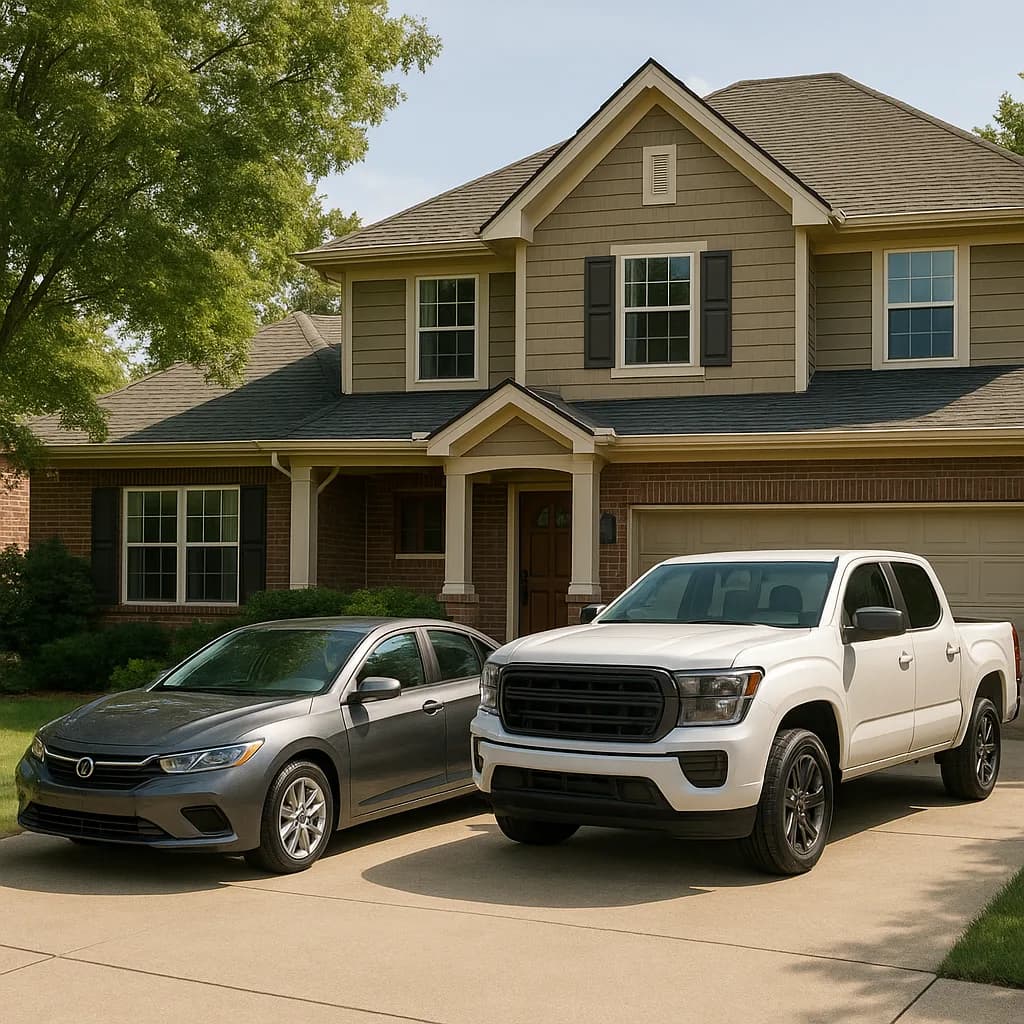
Minimum coverage in Delaware means $25,000 per person and $50,000 per accident in bodily injury liability, $10,000 in property damage liability, and the state-mandated PIP. Full coverage adds comprehensive and collision with a deductible you choose, typically $500 or $1,000. The jump from minimum to full coverage on a single vehicle can double the premium, but the percentage increase shrinks when you add a second or third vehicle to the same policy because the multi-car discount applies to the base rate before coverage layers are added.
Driving record, age, credit score where lawful, garaging ZIP code, and annual mileage all shift the base rate. Delaware's high uninsured-motorist population means carriers price collision and uninsured-motorist coverage more aggressively in counties with higher claim frequencies. A household in New Castle County with two vehicles and clean records will see different quotes than a household in Sussex County with the same vehicles but one driver carrying points, even when both request identical coverage.
Related Articles




How the Multi-Car Discount Lowers Household Cost
The multi-car discount applies when you insure two or more vehicles on the same policy. Carriers reduce the per-vehicle base rate because insuring multiple cars to one household spreads administrative cost and reduces lapse risk. The discount typically requires every vehicle to be garaged at the same address and titled to household members on the policy.
Adding a second vehicle to an existing policy does not simply double your premium. The multi-car discount reduces the base rate on both vehicles, and you avoid paying a second policy fee.
The discount grows with each additional vehicle, but the percentage gain per car shrinks. The jump from one car to two produces the largest per-vehicle savings; adding a third or fourth car continues to lower the average cost per vehicle, but by a smaller margin each time. Carriers writing multi-vehicle policies in Delaware include Geico, Progressive, State Farm, Allstate, Farmers, Liberty Mutual, and Nationwide, among others.
Delaware Uninsured Motorist Rate
17.6%
Nearly one in five Delaware drivers carries no insurance. That rate drives up uninsured-motorist and collision coverage costs for insured drivers, because carriers price the risk of a claim involving an uninsured at-fault driver into every policy that includes those coverages.
Delaware state insurance statistics, 2023
Coverage Decisions That Change Your Household Premium
Choosing a $1,000 deductible instead of $500 lowers your comprehensive and collision premium on each vehicle.
Dropping collision and comprehensive on an older vehicle eliminates those coverages' premiums entirely. If a car is worth less than ten times the annual collision and comprehensive cost, many households drop both and self-insure the vehicle's value.
Compare Carriers Writing Delaware Multi-Car Policies
Delaware has 18 major carriers writing multi-vehicle policies, including Geico, Progressive, State Farm, Allstate, Farmers, Liberty Mutual, Nationwide, USAA, Travelers, The Hartford, and others. Each carrier prices Delaware's mandatory PIP and high uninsured-motorist rate differently, and each applies its own multi-car discount structure. A household that gets the lowest quote from one carrier for a single vehicle may find a different carrier offers the best rate when adding a second or third car.
Request quotes that include every vehicle you plan to insure on the same policy. Carriers calculate the multi-car discount at the policy level, so quoting one car at a time and then adding vehicles later produces a different total than quoting all vehicles together from the start. Provide the same coverage selections, deductibles, and driver information to each carrier so the quotes reflect true rate differences rather than coverage mismatches. Use Delaware's state-specific comparison tool to see how carriers price your exact household configuration side by side.