
What Delaware Drivers Actually Pay
You need to know what car insurance costs in Delaware because you're deciding whether your current premium is reasonable, whether adding a second vehicle will double your bill, or whether the quote you just received reflects what other households pay. The state-level average tells you where the center sits, but it doesn't explain the range or what moves a household from one end to the other.
Delaware drivers paid an average of $1,462.03 per insured vehicle in 2023, according to NAIC data. That figure is an annual expenditure average across all coverage levels, all driver profiles, and all household structures. A household insuring two cars does not pay twice that amount—the multi-car discount compresses per-vehicle cost as fleet size grows, and the discount's size varies by carrier and by how the household structures its policies.
Compare car insurance rates in your state
Get quotes from licensed carriers — no obligation, no spam, results in minutes.
Get Your Free QuoteDelaware Annual Expenditure Per Vehicle
This is the 2023 NAIC average across all insured vehicles in the state. Multi-car households typically pay less per vehicle due to the multi-car discount, which requires all vehicles on one policy.
NAIC Auto Insurance Database Report 2023
How Multi-Car Households Change the Math
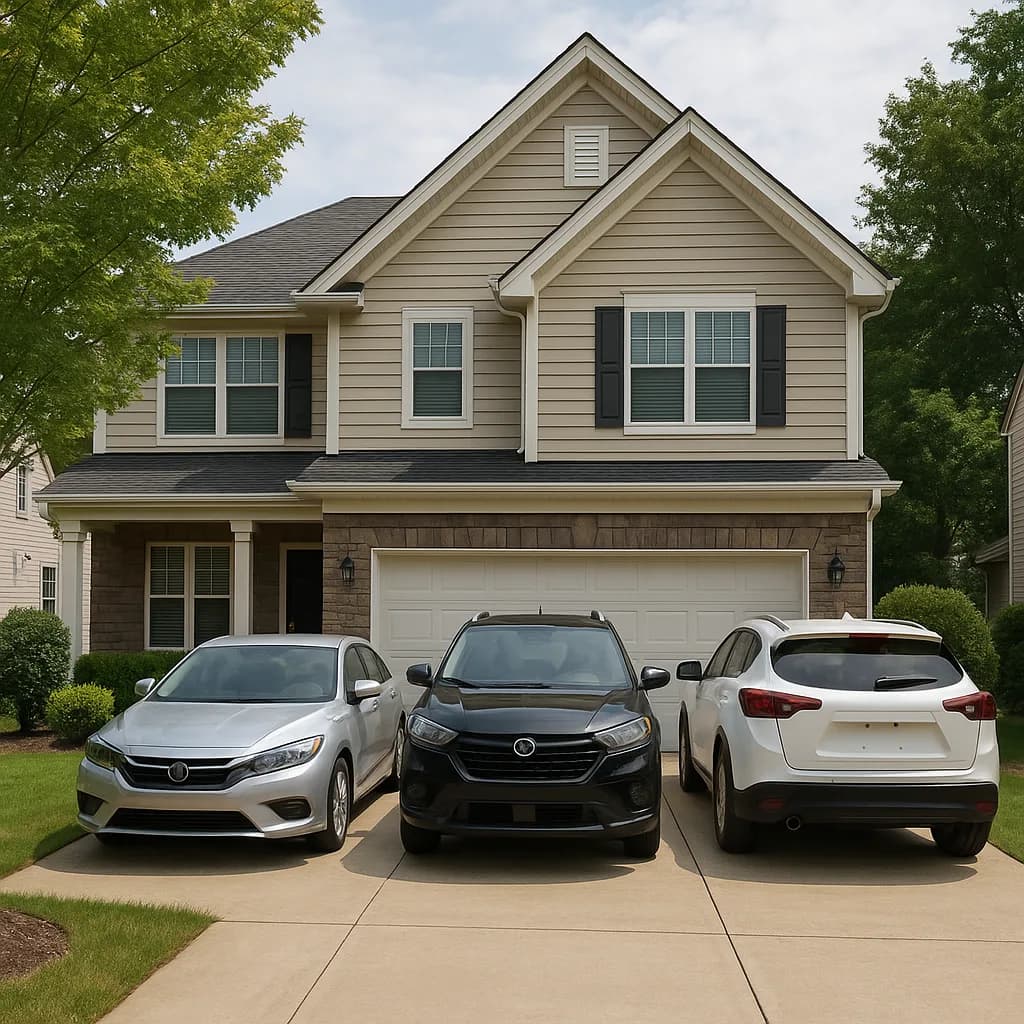
The published average reflects single-car and multi-car households combined. A household insuring one vehicle pays the full per-vehicle rate. A household insuring two or more vehicles on the same policy qualifies for the multi-car discount, which reduces the per-vehicle premium. The discount applies to the policy, not to individual cars, so every vehicle on the policy benefits.
The discount requires every vehicle to sit on the same policy. A household with two cars on separate policies pays two full premiums with no discount. Combining those policies into one triggers the discount and lowers the combined total. The size of the discount varies by carrier—some apply a flat percentage reduction, others adjust the base rate tier when multiple vehicles appear.
Adding a third or fourth vehicle continues to compress per-vehicle cost, but the marginal benefit shrinks. The discount between one car and two is larger than the discount between three cars and four. Carriers re-rate the entire policy when a vehicle is added, so the total premium rises, but the per-vehicle average falls.
A household with two cars on separate policies pays more than the same household with both cars on one policy, even if the coverage levels are identical.
State Minimum Coverage Requirements
Delaware requires $25,000 bodily injury liability per person, $50,000 per accident, and $10,000 property damage liability. The state also mandates personal injury protection coverage. These minimums apply to every vehicle on the road, whether the household insures one car or five. Meeting the minimum costs less than carrying full coverage, but minimum-limit policies leave the household exposed to out-of-pocket costs if a claim exceeds the limits.
Households with multiple vehicles often carry higher liability limits because a single at-fault accident can trigger claims against the household's combined assets. A $25,000 per-person limit is exhausted quickly in a serious injury claim.
Related Articles




What Moves a Household Above or Below the Average
Households pay more or less depending on driving record, vehicle type, coverage level, and location within the state. A household with two vehicles, clean records, and liability-only coverage on older cars sits well below the average. A household with three newer vehicles, full coverage, and a recent at-fault claim sits above it.
Delaware uses a fault-based system, so at-fault accidents and violations raise premiums more sharply than in no-fault states. A DUI, a suspended license reinstatement, or multiple at-fault accidents in three years push a household into the non-standard tier, where per-vehicle cost rises significantly. Carriers writing non-standard policies charge higher base rates, and the multi-car discount on a non-standard policy is smaller than on a standard-tier policy.
Location within Delaware affects cost. Wilmington's higher traffic density and theft rate produce higher premiums than rural Sussex County. Carriers adjust rates by ZIP code, so two identical households insuring identical vehicles pay different amounts if one garages cars in Wilmington and the other in Seaford. The multi-car discount applies after the location adjustment, so the discount's dollar value is larger in high-cost ZIP codes.
Delaware Uninsured Motorist Rate
17.6%
Nearly one in six Delaware drivers carries no insurance. Uninsured motorist coverage protects your household when an at-fault driver has no policy, and it costs less per vehicle on a multi-car policy.
Insurance Information Institute, 2023
Comparing Carriers for Multi-Vehicle Households
The multi-car discount's size varies by carrier. Some carriers reduce the total premium by a fixed percentage when a second vehicle is added. Others adjust the base rate tier, which produces a larger dollar discount on higher-coverage policies. A household comparing quotes must compare the total policy premium, not the per-vehicle average the carrier advertises, because the advertised figure often reflects a single-vehicle rate.
Carriers writing in Delaware include State Farm, GEICO, Progressive, Allstate, Nationwide, Liberty Mutual, Farmers, and USAA. Each uses a different rating algorithm, so the lowest-cost carrier for a single vehicle is not always the lowest-cost carrier for a multi-car household. A household with three vehicles should request quotes that include all three cars on one policy, then compare the total annual premium across carriers.
Compare Multi-Car Quotes in Delaware
The published average gives you a reference point, but your household's actual cost depends on how many vehicles you insure, how you structure the policy, and which carrier writes it. A multi-car household pays less per vehicle than the state average when the discount is applied correctly, but only if every vehicle sits on the same policy and the household shops carriers that compete for multi-vehicle business.
Request quotes from at least three carriers that write multi-car policies in Delaware. Provide the same coverage levels, the same vehicles, and the same driver information to each. Compare the total annual premium, not the per-vehicle breakdown, because the multi-car discount compresses per-vehicle cost in ways that vary by carrier. The lowest total premium is the best deal, regardless of how the carrier structures the discount.